
Serenity Africa Safaris · Mountain journeys
Kilimanjaro, with perspective.
A remarkable mountain deserves careful preparation. Explore route choices, acclimatisation and the questions to ask before committing.
01 / Mountain journeys
More than a summit
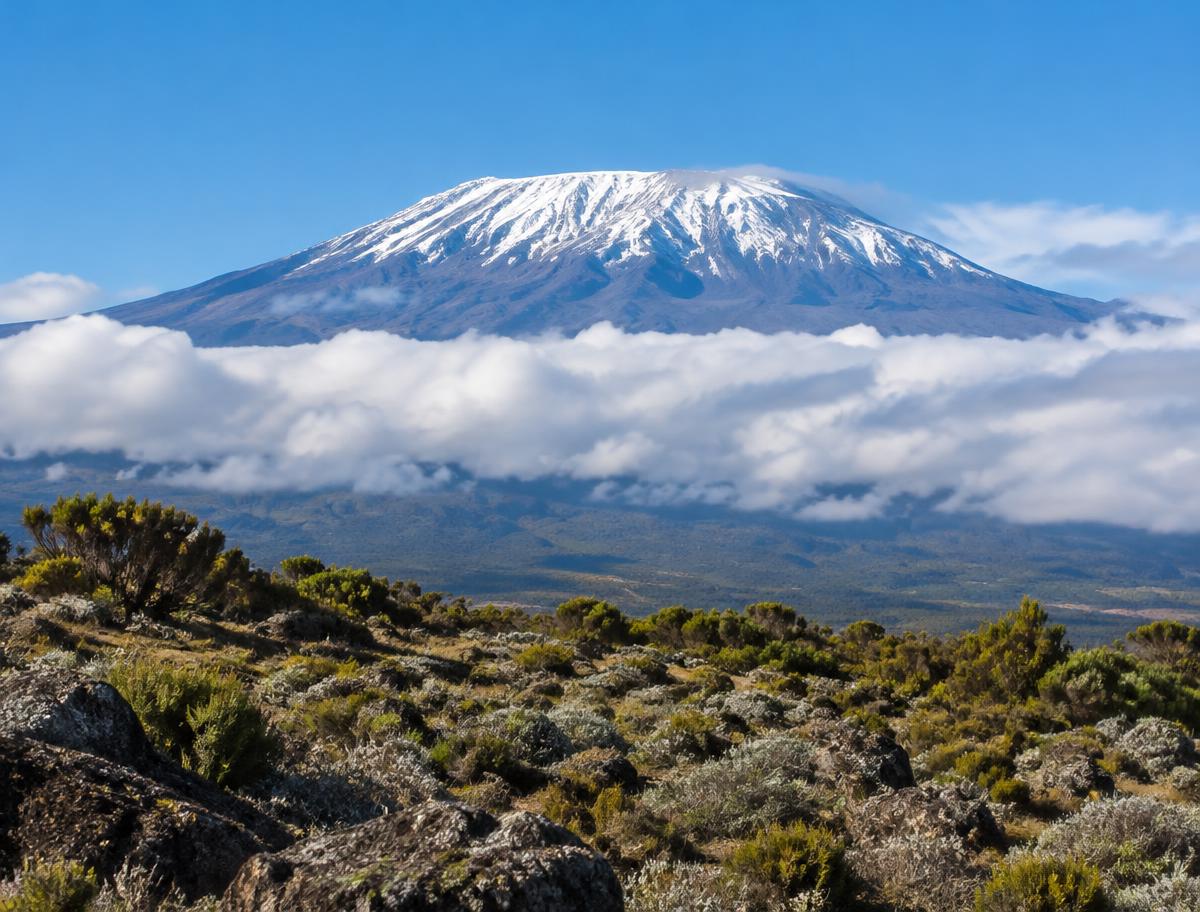
Kilimanjaro is Africa’s highest mountain, with Uhuru Peak at approximately 5,895 metres. The ascent crosses very different environments, from forest and moorland into cold high-altitude terrain. Fitness helps with sustained walking, but it does not make a traveller immune to altitude illness.
- A guided multi-day trek, not a casual hike
- Cold, wind and changing weather at altitude
- A slower ascent and realistic turnaround expectations
- Foothill stays and mountain views as alternatives
02 / Mountain journeys
All seven Kilimanjaro routes
There are seven main trekking routes on Kilimanjaro. Each differs in starting point, scenery, accommodation, crowding and acclimatisation profile. Day counts below are typical ranges only; exact schedules, sleeping altitudes, permits and pricing must be confirmed in a written operator proposal.
03 / Mountain journeys
Marangu Route
Typically 5–6 days. Approaches from the south-east and is the only route with shared hut accommodation in sleeping-hut style. Ascent and descent follow the same path, and the shorter standard profile gives less time to acclimatise.
- Hut accommodation, availability to confirm
- Usually 5 or 6 days
- Same path up and down
- Shorter itineraries carry higher altitude risk
04 / Mountain journeys
Machame Route
Typically 6–7 days. A popular camping route from the south-west, crossing rainforest, Shira Plateau, Lava Tower and the Barranco Wall. Its climb-high, sleep-low profile helps acclimatisation, but it can be busy.
- Camping throughout
- Usually 6 or 7 days
- Barranco Wall scramble
- Descends via Mweka
05 / Mountain journeys
Lemosho Route
Typically 7–8 days. A quieter western start through remote forest before crossing the Shira Plateau to join the southern circuit. Longer schedules give a gentler acclimatisation profile.
- Camping throughout
- Usually 7 or 8 days
- Scenic western approach
- Often chosen for longer, steadier ascents
06 / Mountain journeys
Shira Route
Typically 6–7 days. Similar to Lemosho but begins higher on the Shira Plateau, usually reached by vehicle. The high starting altitude means less gradual early acclimatisation.
- Camping throughout
- Vehicle access to a high trailhead
- Joins the southern circuit
- Starting altitude to discuss with your clinician
07 / Mountain journeys
Rongai Route
Typically 6–7 days. The only route approaching from the north, near the Kenyan border. It is drier and often quieter, with gentler gradients, descending on the Marangu side.
- Camping throughout
- Northern approach, often drier
- Gradual gradients
- Descends via Marangu
08 / Mountain journeys
Northern Circuit
Typically 8–9 days. The longest route, beginning in the west and circling the quieter northern slopes before the summit. The extended time on the mountain supports acclimatisation.
- Camping throughout
- Usually 8 or 9 days
- Least crowded, most remote
- Longest time at altitude to budget for
09 / Mountain journeys
Umbwe Route
Typically 5–6 days. A short, steep and direct southern ascent suited only to experienced, well-acclimatised trekkers. Rapid altitude gain makes it the most demanding choice.
- Camping throughout
- Steep and direct
- For experienced trekkers only
- Limited acclimatisation time
10 / Mountain journeys
Altitude is the priority
Headache, nausea, unusual fatigue and dizziness can be warning signs at altitude. Serious symptoms need immediate professional assessment and may require descent. Do not continue upwards simply to stay with a schedule. Discuss your health with an appropriate clinician before travel and confirm your guide’s emergency procedures, communication and evacuation arrangements.
11 / Mountain journeys
Ask about the people behind the climb
A responsible proposal should explain who guides the group, how porters are equipped and treated, what is carried, and what happens if someone must descend. Ask about insurance that explicitly covers the intended altitude and rescue arrangements. No summit success rate, medical support claim or welfare certification is assumed here.
Before you go
A few things to know.
Is a summit guaranteed?
No. Weather, altitude response and individual health can prevent an ascent. A safe turnaround is a sound outcome, not a failure.
Can I add a safari afterwards?
It may be possible, but include recovery time and confirm travel connections. Do not schedule an inflexible safari departure immediately after the expected descent.
Where can I read medical guidance?
The CDC Yellow Book high-altitude travel guidance and an appropriate travel-health clinician are useful starting points. They do not replace an individual medical assessment.
Every extraordinary journey starts somewhere
Let’s make it yours.
The landscapes you dream of. The time you want to take. A Tanzania journey shaped around what matters to you.
Explore your options · No booking commitment